When we think about aircraft carriers in combat, it is easy to picture the great carrier battles of the Second World War: Pearl Harbor, Midway, the Coral Sea, or the Philippine Sea. Yet the story of the aircraft carrier began decades earlier, during the First World War.
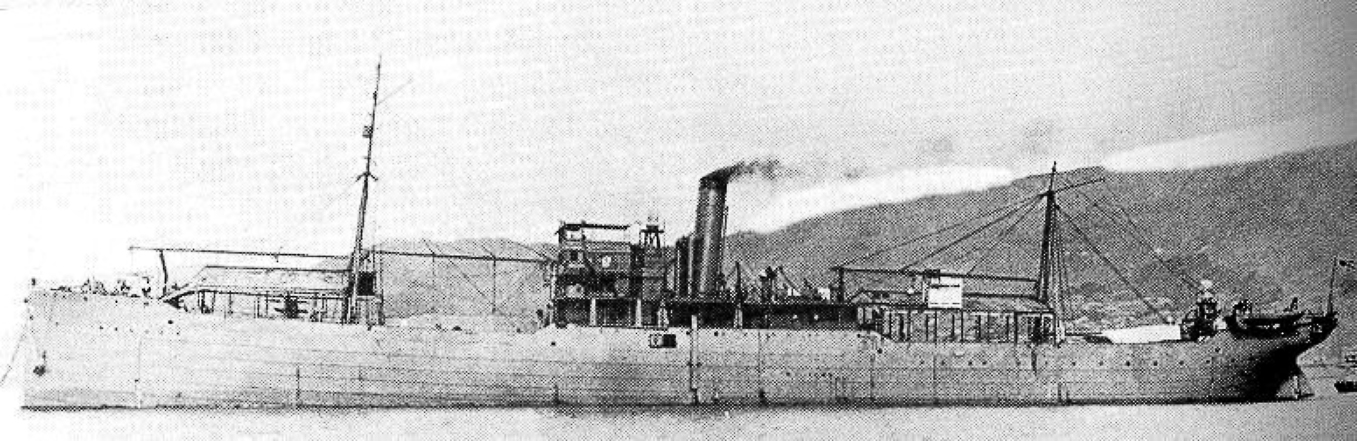
The first vessel to operate naval aircraft in combat was the Japanese Wakamiya, a converted transport that carried seaplanes during the Siege of Tsingtao (Qingdao) in 1914. In September of that year, aircraft launched from Wakamiya conducted reconnaissance and bombing missions against German positions and ships.
The aircraft accomplished little physical damage, but the importance of the operation was enormous. For the first time, a warship had demonstrated that aircraft could be carried with a naval force, launched in the vicinity of an enemy, and used to attack targets beyond the range of the ship's guns.
The experiment would eventually transform naval warfare.
The World in 1914
The First World War began in August 1914 after decades of growing tension among the European powers.
Germany, Austria-Hungary, Britain, France, Russia, and eventually many other nations entered the conflict.
Japan was initially a relatively distant participant. Under the Anglo-Japanese Alliance of 1902, Japan was aligned with Britain. When Britain went to war with Germany, Japan entered the conflict on the Allied side.
Japan's principal objective was not to fight Germany in Europe.
Instead, it saw an opportunity to eliminate German influence in East Asia and seize German possessions in the Pacific.
The most important German possession was Tsingtao, a fortified port on China's Shandong Peninsula.
Germany had established a naval base there and maintained the Kiautschou Bay concession.
Tsingtao was also associated with the German East Asia Squadron, although the main German squadron under Vice Admiral Maximilian von Spee soon departed rather than allow itself to be trapped by the Japanese.
Japan therefore assembled a substantial force to besiege the German base.
The Siege of Tsingtao
Japan declared war on Germany on August 23, 1914.
A Japanese naval force subsequently established a blockade, while Japanese troops landed and advanced toward Tsingtao. Approximately 23,000 Japanese troops participated in the operation, supported by artillery and naval forces. Britain also provided troops and naval support.
The German defenders were considerably smaller in number but possessed substantial fortifications.
The Japanese needed to conduct reconnaissance and determine the location of German positions.
This created an opportunity for a new technology.
Aircraft.
Enter the Wakamiya
The ship at the center of this story was originally not an aircraft carrier.
She had been a Russian merchant ship captured by Japan during the Russo-Japanese War.
The Japanese converted the vessel to carry aircraft.
By 1914 she had become a seaplane carrier and was capable of transporting four Maurice Farman floatplanes. The aircraft were stored aboard ship and lowered into the water by cranes. After completing their missions, they could be recovered and hoisted back aboard.
This was obviously very different from the aircraft carriers of the Second World War.
There was no flight deck.
The aircraft did not take off directly from the ship.
Instead:
Ship → crane → water → aircraft takes off
and after the mission:
Aircraft lands on water → crane → ship.
Nevertheless, the fundamental concept was there.
A naval vessel could carry aircraft with a fleet and deploy them wherever they were needed.
The Wakamiya is therefore properly described as a seaplane carrier or seaplane tender, rather than a fleet carrier in the later sense.
The First Combat Mission
On September 5, 1914, one of Wakamiya's Farman aircraft conducted a reconnaissance mission over Tsingtao.
The aircraft discovered that the German East Asia Squadron had departed.
The following day, the Japanese aircraft were used against German naval targets.
This produced what is generally regarded as the first air-sea battle in history.
A Farman seaplane launched from Wakamiya attacked the German gunboat Jaguar and the Austro-Hungarian cruiser Kaiserin Elisabeth with small bombs.
The bombs missed their targets.
From the standpoint of immediate destruction, the attack was a failure.
From the standpoint of military history, it was revolutionary.
For the first time, aircraft had been launched from a vessel at sea and used against enemy ships.
What Did the Aircraft Actually Do?
The Farmans were primitive by later standards.
They were slow, lightly constructed biplanes with limited payloads and relatively short endurance.
Their bombs were extremely small.
The aircraft could not carry anything resembling the heavy torpedoes and bombs that would be carried by later carrier aircraft.
Yet the Japanese found several useful missions for them.
They conducted:
- Reconnaissance
- Artillery spotting
- Observation
- Photography
- Bombing
- Attacks against naval targets
During the siege, the aircraft conducted roughly 50 sorties and dropped around 190–200 bombs, depending on how the missions are counted. Most of the attacks were against land targets rather than ships.
The physical damage was generally limited.
But the intelligence value was considerably greater.
Aircraft as the Eyes of the Fleet
One of the most important lessons of Tsingtao was that aircraft didn't have to destroy enemy ships to be valuable.
They could find them.
This sounds obvious today.
It was revolutionary in 1914.
A battleship's horizon was limited by the curvature of the Earth.
An aircraft could climb hundreds or thousands of feet and see much farther.
That meant aircraft could potentially:
- Locate enemy fleets
- Identify enemy positions
- Direct artillery fire
- Photograph defenses
- Search for submarines
- Scout ahead of a fleet
- Attack targets beyond the range of naval guns
The reconnaissance role proved more immediately useful than bombing.
This would become a fundamental principle of naval aviation.
The German Response
The German defenders were not helpless.
They had aircraft of their own at Tsingtao.
One Japanese Farman was eventually shot down by the German aircraft during the fighting. Interestingly, the Japanese aircraft itself was unarmed, and the German aircraft reportedly used a pistol to attack it. This is regarded as the first air-to-air combat in history.
The incident demonstrated another emerging reality:
Once aircraft entered warfare, they would have to fight other aircraft.
Naval aviation was already beginning to create its own battlespace.
The Wakamiya Hits a Mine
The experiment almost came to an early end.
On September 30, Wakamiya struck a German mine.
The ship was damaged and had to withdraw for repairs.
Fortunately for the Japanese, the aircraft were not lost.
Several were moved ashore and continued operating from land bases while Wakamiya was repaired.
This was an important practical lesson.
Aircraft did not necessarily have to remain aboard the ship.
A carrier could function as a mobile aviation base, transporting aircraft close to the battlefield and then operating them from temporary land facilities.
The concept would be used repeatedly in later wars.
The Fall of Tsingtao
The Japanese and British gradually tightened the siege.
Japanese aircraft continued reconnaissance and bombing missions.
The Germans eventually surrendered on November 7, 1914.
The campaign was a major Japanese victory.
Japan eliminated Germany's principal military presence in East Asia and gained control of the German concession at Tsingtao.
But the military significance of the campaign extended beyond the capture of a colonial possession.
It had demonstrated something new:
Aircraft could become an organic part of naval warfare.
How Effective Was the Aircraft Carrier?
If we judge Wakamiya by the standards of later aircraft carriers, the answer is:
Not very effective.
The aircraft were slow.
Their bombs were tiny.
Their accuracy was poor.
They were vulnerable to weather.
Aircraft had limited range.
There was no flight deck.
And recovering aircraft from the water was cumbersome.
The bombing attacks against German ships produced little direct damage.
Yet judging Wakamiya solely by the number of ships it sank misses the point.
The Japanese had demonstrated that an aircraft-carrying vessel could extend the reach of a fleet.
The most important weapon aboard Wakamiya was arguably not the bomb.
It was information.
What Lessons Were Learned?
The Tsingtao campaign provided several lessons that would shape naval aviation.
1. Aircraft Were Excellent Reconnaissance Tools
This was perhaps the most important lesson.
Naval commanders quickly recognized that aircraft could search enormous areas of ocean much more effectively than ships.
The aircraft carrier could therefore become the eyes of the fleet.
2. Aircraft Could Attack Ships
The bombs dropped at Tsingtao were ineffective against the German ships.
But the basic concept worked.
Aircraft could attack ships from the air.
The question was no longer whether this was possible.
The question was how to make it effective.
That would lead to larger aircraft, better bombs, torpedoes, improved navigation, better communications, and specialized carrier aircraft.
3. Carriers Needed Better Launch and Recovery Systems
Wakamiya's system was cumbersome.
Aircraft had to be lowered into the water.
They then had to take off from the sea.
After landing, they had to be recovered by crane.
The solution would eventually be the flight deck.
Instead of treating aircraft as boats that happened to fly, naval designers would create ships specifically designed to allow aircraft to take off and land directly from the vessel.
4. Naval Aviation Required Specialized Ships
Wakamiya began life as a converted transport.
That was adequate for experimentation.
But naval aviation would eventually require purpose-built carriers.
Britain, Japan, and the United States all began experimenting with carrier designs during and immediately after the First World War.
The world's first purpose-built aircraft carrier, HMS Hermes, was laid down during the First World War, although development and construction took years.
The British Follow
The Japanese were not alone in experimenting with shipborne aircraft.
Britain was also developing naval aviation.
In December 1914, British seaplanes operating from converted vessels conducted an attack against the German Zeppelin base at Cuxhaven.
This demonstrated that aircraft launched from ships could strike targets far beyond the immediate battlefield.
The British would eventually become one of the world's leading naval aviation powers.
The experience of the First World War helped produce the carriers that would dominate naval warfare two decades later.
From Wakamiya to Pearl Harbor
The distance between Wakamiya and the aircraft carriers of 1941 is enormous.
But there is a direct technological lineage.
At Tsingtao in 1914:
Four small floatplanes were carried by one converted ship.
At Pearl Harbor in 1941:
Six Japanese aircraft carriers launched more than 350 aircraft against the American Pacific Fleet.
The principle was fundamentally the same.
Aircraft could be carried aboard ships and launched from the sea to attack targets hundreds of miles away.
The technology had changed dramatically.
The concept had not.
Japan Would Become a Carrier Power
The irony is that the country conducting this primitive experiment in 1914 would eventually become one of the world's greatest carrier powers.
Japan developed increasingly sophisticated naval aviation during the interwar period.
By the beginning of the Second World War, the Imperial Japanese Navy possessed some of the world's most capable carrier aircraft and had developed advanced doctrines for carrier operations.
The experience gained at Tsingtao was only a tiny beginning.
Yet the Japanese Navy had recognized the potential of naval aviation earlier than many other powers.
The Real Revolution Was Still to Come
The First World War did not immediately make aircraft carriers the dominant capital ships.
Battleships remained the ultimate symbols of naval power.
Naval officers continued to debate whether aircraft were auxiliary weapons or could replace the battleship as the primary striking force.
The answer would not become clear until the Second World War.
The carrier battles of Coral Sea, Midway, the Philippine Sea, and Leyte Gulf demonstrated that aircraft could destroy surface ships from distances at which the ships themselves could not fight back.
By then, the naval revolution that began with experiments such as Wakamiya had matured.
Why the Tsingtao Battle Matters
The fighting around Tsingtao was relatively small compared with the enormous battles of the First World War.
Thousands of soldiers would die in single battles on the Western Front.
Tsingtao was a peripheral campaign.
And the aircraft involved were primitive.
Yet historically it was extraordinarily important.
In September 1914, a converted Japanese transport carrying four floatplanes demonstrated the basic concept of naval aviation in combat.
The aircraft did not sink a battleship.
They did not radically alter the outcome of the siege.
But they demonstrated that naval aircraft could provide reconnaissance, artillery spotting, and offensive capabilities.
The Japanese Navy had discovered that a ship could carry its own aircraft into a combat zone and use them to extend the fleet's reach.
Conclusion
The first combat use of an aircraft carrier took place not in the Second World War, but during the Siege of Tsingtao in September 1914.
Japan's Wakamiya carried four Maurice Farman seaplanes and deployed them against German forces.
The aircraft conducted reconnaissance, photographed enemy positions, directed naval operations, and carried out bombing missions. Their attacks against German and Austro-Hungarian ships were largely unsuccessful, but the operation nevertheless represented a revolutionary development in naval warfare.
The important lesson was not that aircraft could immediately replace battleships.
It was that aircraft could give a fleet something ships could never possess: the ability to see and attack far beyond the horizon.
Wakamiya was a crude beginning.
There was no flight deck, no catapult, no sophisticated aircraft, and no precision-guided weaponry.
But the basic idea had arrived.
Within a generation, aircraft carriers would become the centerpiece of naval warfare.
And the transformation began with four fragile biplanes taking off from the deck of a converted Japanese transport at Tsingtao in 1914.

No comments:
Post a Comment