Showing posts with label Japan. Show all posts

Saturday, September 5, 2026

The Samurai: The Reality Behind Japan's Legendary Warriors

Samarai


Few warriors in world history have become as famous—or as heavily mythologized—as the samurai of Japan. Popular culture presents them as masters of the sword, bound by an unbreakable code of honour, wandering the countryside in dramatic duels and prepared to die rather than suffer disgrace.

There is some truth in that image. Samurai were indeed a military elite who played a central role in Japanese history for centuries. They developed distinctive weapons, armour and military traditions, and ideas about loyalty and honour became deeply associated with them.

But the popular image of the samurai is also highly misleading.

The real samurai were not simply swordsmen. For much of their history, they were mounted archers, professional soldiers, administrators, landowners and government officials. They fought in large armies, used spears and firearms, participated in sieges and sometimes changed sides when political circumstances demanded it.

The samurai were neither fantasy superheroes nor simply Japanese versions of medieval European knights. They were the product of a distinctive Japanese military and political system that evolved dramatically over nearly a thousand years.

What Was a Samurai?

The word samurai is derived from a Japanese term meaning something like "one who serves."

Originally, the term referred to people who served powerful aristocrats. Over time, it became associated with Japan's professional warrior class.

The samurai emerged gradually rather than appearing suddenly at a particular moment in history.

During the early centuries of Japanese history, political power was concentrated around the imperial court. But the central government did not always have effective control over distant regions.

Local landowners and powerful families increasingly needed armed men to protect their interests.

These warriors developed into a distinct military class.

By the late Heian period, particularly during the tenth and eleventh centuries, powerful warrior families had become increasingly important.

Two clans became especially famous:

  • The Minamoto
  • The Taira

Their struggles would eventually transform Japanese history.

The Rise of the Samurai

The samurai became politically dominant during the conflicts of the late twelfth century.

The Genpei War, fought between the Minamoto and Taira clans from 1180 to 1185, was a decisive moment.

The Minamoto eventually defeated the Taira.

After the war, Minamoto no Yoritomo established a military government known as the Kamakura shogunate.

Japan still had an emperor.

But real political and military power increasingly belonged to the shogun and the warrior class.

This was the beginning of centuries in which samurai would dominate Japanese political life.

The Samurai Were Not Just Swordsmen

One of the biggest misconceptions about samurai is that the katana was always their primary battlefield weapon.

The katana became enormously important as a cultural symbol, but for much of samurai history, other weapons were more important in actual warfare.

Early samurai were particularly associated with the bow.

The Bow: The Original Samurai Weapon

Early samurai were often mounted archers.

The Japanese longbow, or yumi, was a powerful and distinctive weapon.

Unlike many European bows, the yumi was asymmetrical. The grip was positioned below the centre of the bow.

Mounted warriors could use the bow while riding, and archery was an essential part of early samurai military culture.

In fact, the sword became the defining symbol of the samurai partly because it was a weapon that could be worn continuously.

On the battlefield, however, the spear or bow could be far more useful.

The Katana

The katana is probably the most famous weapon associated with the samurai.

It was a curved, single-edged sword designed for cutting.

The katana developed from earlier Japanese sword designs and became especially prominent during the later medieval period.

Samurai often carried a pair of swords called the daishō:

  • The katana, the longer sword
  • The wakizashi, the shorter sword

During the Edo period, wearing these two swords became an important symbol of samurai social status.

But popular culture often exaggerates the katana's role.

A samurai was not necessarily walking around looking for opportunities to fight sword duels.

Most military combat involved formations, larger weapons and increasingly sophisticated tactics.

The katana was important—but it was not a magical weapon capable of cutting through anything.

The Spear: One of the Most Important Samurai Weapons

The yari, or Japanese spear, became increasingly important.

As warfare developed, armies became larger and more organized.

Massed infantry armed with spears could be extremely effective.

Samurai themselves used spears, while large numbers of infantry known as ashigaru were also equipped with yari.

During the great civil wars of the fifteenth and sixteenth centuries, the spear became one of the most important weapons on Japanese battlefields.

This is one of the major differences between the popular image of the samurai and reality.

The popular samurai fights alone with a sword.

The historical samurai often fought as part of a much larger military organization.

The Naginata

Another important weapon was the naginata.

This was a pole weapon with a curved blade attached to a long shaft.

The naginata could be used to strike, cut and keep opponents at a distance.

It was used by samurai warriors and eventually became strongly associated with certain groups of women from samurai families as well.

Like other polearms, the naginata was often more practical in combat than a sword.

Firearms and the Samurai

Perhaps one of the greatest myths about the samurai is that they rejected firearms because guns were somehow dishonourable.

The historical evidence tells a very different story.

Firearms arrived in Japan in the sixteenth century, following contact with Portuguese traders.

The Japanese rapidly adopted the arquebus, known in Japan as the tanegashima.

During the Sengoku period, firearms became increasingly important.

Japanese armies used large numbers of arquebusiers.

Some of the most famous samurai commanders recognized immediately that firearms could transform warfare.

Oda Nobunaga and Firearms

One of the most famous Japanese military leaders, Oda Nobunaga, made extensive use of firearms.

At the Battle of Nagashino in 1575, Nobunaga's forces used large numbers of arquebusiers against the cavalry of the Takeda clan.

The battle later became famous for stories of organized volleys of gunfire, although popular accounts of exactly how those tactics worked have sometimes been simplified or exaggerated.

The larger point remains clear:

The samurai did not reject new military technology.

When guns became useful, Japanese armies adopted them.

Samurai Armour

Samurai armour changed dramatically over the centuries.

The earliest armour was designed for the needs of mounted archers.

Later armour had to adapt to infantry warfare, spears and firearms.

Ō-Yoroi

The ō-yoroi was one of the most distinctive forms of early samurai armour.

It was large and elaborate, designed primarily for mounted warriors.

The armour was constructed from small plates known as kozane, connected together with silk or leather lacing.

It provided significant protection while allowing a warrior to use a bow.

The colourful lacing also made samurai armour visually striking.

Dō-Maru

The dō-maru was another form of armour that became increasingly popular.

It was generally more flexible and practical than the earlier ō-yoroi.

As warfare changed and samurai increasingly fought on foot, mobility became more important.

Tōsei-Gusoku

During the Sengoku period, armour underwent significant changes.

The development of firearms encouraged the creation of stronger and more practical armour.

This newer style was called tōsei-gusoku, meaning something like "modern armour."

Armour could incorporate larger plates of iron and steel.

This was another example of the samurai adapting to technological change.

The Kabuto

The kabuto, or helmet, was one of the most recognizable parts of samurai armour.

Japanese helmets could be extremely elaborate.

Some included:

  • horns;
  • crests;
  • family symbols;
  • decorative designs;
  • dramatic shapes.

These designs were not simply decorative.

They could help identify commanders and intimidate enemies.

The helmet became an important symbol of the samurai warrior.

How Did Samurai Fight?

The answer depends greatly on the period.

There was no single style of samurai warfare.

Early Samurai Warfare

Early samurai were strongly associated with mounted combat and archery.

Individual warriors could seek opportunities to demonstrate personal bravery.

There was an important tradition of identifying oneself and one's family before combat.

But warfare was never simply a series of individual duels.

Military organization, alliances and strategy mattered enormously.

Medieval Warfare

As Japan entered periods of increasing political instability, armies became larger.

Castles became more important.

Sieges became common.

Infantry played a greater role.

Spears became increasingly significant.

Sengoku Warfare

The Sengoku period, roughly from the mid-fifteenth century to the early seventeenth century, was one of the great ages of samurai warfare.

Japan was divided among competing warlords known as daimyō.

These leaders maintained armies consisting of:

  • samurai;
  • ashigaru infantry;
  • archers;
  • spearmen;
  • cavalry;
  • arquebusiers.

The romantic image of a samurai fighting alone with a sword is particularly misleading when applied to this period.

Sengoku warfare involved large armies, organized formations, logistics, fortifications and firearms.

In many ways, it was sophisticated early modern warfare.

The Samurai and Bushidō

Popular culture often claims that all samurai followed an ancient and unchanging code called Bushidō, or "the Way of the Warrior."

This is another area where history is more complicated.

Samurai certainly developed ideas about:

  • loyalty;
  • courage;
  • honour;
  • duty;
  • military skill.

But there was no single universal Bushidō rulebook followed by every samurai throughout Japanese history.

The modern popular idea of Bushidō was shaped significantly during the Edo period and later.

By that time, Japan had entered a long period of peace.

Samurai were no longer constantly fighting wars.

As a result, writers increasingly reflected on what it meant to be a warrior.

The ideals associated with the samurai became more formalized and philosophical.

In other words, much of what people think of as the traditional samurai code developed after the greatest period of samurai warfare had ended.

Were Samurai Always Loyal?

Another popular myth is that samurai would rather die than betray their lord.

Loyalty was certainly important.

But medieval and early modern politics were complicated.

Samurai sometimes changed sides.

They formed alliances.

They betrayed former allies.

They fought for political advantage.

They competed for land and power.

This should not surprise us.

Samurai were human beings operating within a complex political system.

The reality was often much messier than the idealized stories of perfect loyalty.

Seppuku and Samurai Honour

Seppuku, sometimes called harakiri, is one of the practices most strongly associated with samurai culture.

It involved ritual suicide, traditionally by cutting the abdomen.

Seppuku could be performed for various reasons, including avoiding capture or preserving honour.

But popular culture often exaggerates how common it was.

Not every defeated samurai committed seppuku.

And the practice changed over time.

It became increasingly formalized during the Edo period.

The dramatic image of the samurai calmly committing ritual suicide reflects a powerful cultural ideal, but it should not be mistaken for the ordinary experience of every warrior.

The Sengoku Period: The Age of the Warring States

The Sengoku period was arguably the greatest age of samurai warfare.

Beginning in the fifteenth century, Japan experienced prolonged political fragmentation.

Powerful regional lords fought for control.

Some of the most famous figures in Japanese history emerged during this period.

Oda Nobunaga

Oda Nobunaga began the process of reunifying Japan.

He was a ruthless and innovative commander who made effective use of firearms and new military tactics.

Toyotomi Hideyoshi

Toyotomi Hideyoshi continued the process of unification.

His own rise was remarkable because he came from relatively humble origins.

Hideyoshi eventually became one of the most powerful men in Japanese history.

Tokugawa Ieyasu

Tokugawa Ieyasu completed the process.

After winning the Battle of Sekigahara in 1600, he established the Tokugawa shogunate.

Japan entered a new era.

And that era would dramatically change the samurai.

The Edo Period: When Samurai Became Bureaucrats

The Edo period, which began in the early seventeenth century, was characterized by relative peace.

The Tokugawa shogunate successfully established control over Japan.

Large-scale warfare became increasingly rare.

This created an unusual problem.

What happens to a warrior class when there are no major wars to fight?

The answer was that many samurai became:

  • administrators;
  • government officials;
  • teachers;
  • scholars;
  • police officials.

The samurai remained a privileged social class.

But many were no longer professional soldiers in the traditional sense.

Ironically, the period that produced many of the most famous ideas about samurai honour was also a period in which most samurai were not regularly fighting battles.

The End of the Samurai

The samurai system eventually came under enormous pressure during the nineteenth century.

Japan was forced to confront Western military and economic power.

The old feudal system began to collapse.

The Meiji Restoration of 1868 transformed Japan.

The new government abolished many of the privileges associated with the samurai.

Japan created a modern national army.

Military service was increasingly based on conscription rather than membership in a hereditary warrior class.

Former samurai sometimes resisted these changes.

The most famous example was the Satsuma Rebellion of 1877, led by Saigō Takamori.

The rebellion was defeated by the modern Japanese government.

This effectively demonstrated that the age of the traditional samurai was over.

How Different Were Real Samurai from Popular Culture?

The differences are substantial.

Myth: Samurai Primarily Fought with Swords

Reality: Samurai used bows, spears, polearms and firearms. The katana was important, but it was not always the primary battlefield weapon.

Myth: Samurai Fought Mostly in Individual Duels

Reality: Samurai participated in organized armies and large-scale battles.

Myth: Samurai Rejected Guns

Reality: Japanese armies rapidly adopted firearms during the sixteenth century.

Myth: Every Samurai Followed Bushidō

Reality: Samurai ideals changed over time, and the popular concept of Bushidō was significantly shaped during later periods.

Myth: Samurai Were Always Perfectly Loyal

Reality: Samurai participated in alliances, betrayals and political struggles just like other military elites.

Myth: Samurai Were Always Fighting

Reality: During the Edo period, many samurai became administrators and government officials.

Why Have Samurai Become So Mythologized?

The samurai are particularly appealing because they combine several powerful ideas.

They represent:

  • martial skill;
  • loyalty;
  • honour;
  • discipline;
  • tradition;
  • individual courage.

But the samurai were also transformed into symbols after their military importance declined.

During the modern period, Japan increasingly looked back at the samurai as representatives of a heroic national past.

Writers, filmmakers and later popular culture helped create the image of the noble swordsman.

The films of directors such as Akira Kurosawa had an enormous influence on how audiences around the world imagined the samurai.

Western films, novels, comic books, anime and video games then created additional versions of the samurai.

Each generation added something to the legend.

The Samurai's Lasting Military Legacy

The samurai should not be remembered simply as swordsmen.

Their real importance lies in their role as a warrior class that dominated Japanese politics for centuries.

They helped create the military governments that ruled Japan.

They developed distinctive traditions of:

  • mounted warfare;
  • archery;
  • swordsmanship;
  • spear fighting;
  • castle warfare;
  • military organization.

They also adapted repeatedly to changing technology.

The introduction of firearms did not destroy the samurai overnight.

Instead, samurai armies incorporated firearms into their existing military systems.

This is one of the most important lessons of samurai history.

Tradition and adaptation can exist together.

The samurai preserved powerful cultural traditions while repeatedly changing the way they fought.

Conclusion

The real samurai were more interesting than the popular myth.

They were not simply noble swordsmen wandering Japan in search of honourable duels.

They were warriors, political leaders, administrators and members of a powerful hereditary social class.

Over the centuries, they changed dramatically.

Early samurai were closely associated with mounted archery. Later samurai fought with spears and swords. During the Sengoku period, they commanded and served in armies that made extensive use of firearms. During the peaceful Edo period, many became bureaucrats and officials.

Their armour evolved alongside warfare, from elaborate equipment designed for mounted archers to practical armour capable of meeting the challenges of increasingly sophisticated weapons.

And the famous Bushidō code was not a single, unchanging system that governed every samurai.

The reality was complicated.

Samurai could be courageous and cruel, loyal and ambitious, honourable and ruthless.

They were products of their time.

But their military and cultural legacy has endured long after the samurai class itself disappeared.

Perhaps the greatest irony is that the image most people recognize—the silent master swordsman, completely devoted to an ancient code of honour—is partly the product of the centuries after the samurai had stopped being primarily warriors.

The legend of the samurai is powerful.

But the real history is even more fascinating.

Saturday, August 15, 2026

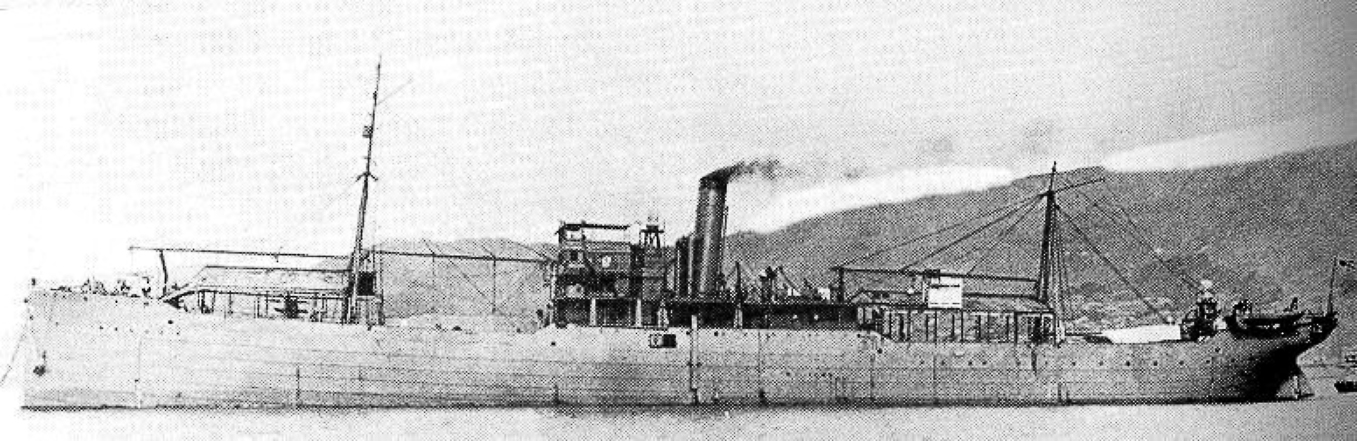
The First Battle Involving an Aircraft Carrier: Wakamiya at Tsingtao

Wakamiya


When we think about aircraft carriers in combat, it is easy to picture the great carrier battles of the Second World War: Pearl Harbor, Midway, the Coral Sea, or the Philippine Sea. Yet the story of the aircraft carrier began decades earlier, during the First World War.

The first vessel to operate naval aircraft in combat was the Japanese Wakamiya, a converted transport that carried seaplanes during the Siege of Tsingtao (Qingdao) in 1914. In September of that year, aircraft launched from Wakamiya conducted reconnaissance and bombing missions against German positions and ships.

The aircraft accomplished little physical damage, but the importance of the operation was enormous. For the first time, a warship had demonstrated that aircraft could be carried with a naval force, launched in the vicinity of an enemy, and used to attack targets beyond the range of the ship's guns.

The experiment would eventually transform naval warfare.


The World in 1914

The First World War began in August 1914 after decades of growing tension among the European powers.

Germany, Austria-Hungary, Britain, France, Russia, and eventually many other nations entered the conflict.

Japan was initially a relatively distant participant. Under the Anglo-Japanese Alliance of 1902, Japan was aligned with Britain. When Britain went to war with Germany, Japan entered the conflict on the Allied side.

Japan's principal objective was not to fight Germany in Europe.

Instead, it saw an opportunity to eliminate German influence in East Asia and seize German possessions in the Pacific.

The most important German possession was Tsingtao, a fortified port on China's Shandong Peninsula.

Germany had established a naval base there and maintained the Kiautschou Bay concession.

Tsingtao was also associated with the German East Asia Squadron, although the main German squadron under Vice Admiral Maximilian von Spee soon departed rather than allow itself to be trapped by the Japanese.

Japan therefore assembled a substantial force to besiege the German base.


The Siege of Tsingtao

Japan declared war on Germany on August 23, 1914.

A Japanese naval force subsequently established a blockade, while Japanese troops landed and advanced toward Tsingtao. Approximately 23,000 Japanese troops participated in the operation, supported by artillery and naval forces. Britain also provided troops and naval support.

The German defenders were considerably smaller in number but possessed substantial fortifications.

The Japanese needed to conduct reconnaissance and determine the location of German positions.

This created an opportunity for a new technology.

Aircraft.


Enter the Wakamiya

The ship at the center of this story was originally not an aircraft carrier.

She had been a Russian merchant ship captured by Japan during the Russo-Japanese War.

The Japanese converted the vessel to carry aircraft.

By 1914 she had become a seaplane carrier and was capable of transporting four Maurice Farman floatplanes. The aircraft were stored aboard ship and lowered into the water by cranes. After completing their missions, they could be recovered and hoisted back aboard.

This was obviously very different from the aircraft carriers of the Second World War.

There was no flight deck.

The aircraft did not take off directly from the ship.

Instead:

Ship → crane → water → aircraft takes off

and after the mission:

Aircraft lands on water → crane → ship.

Nevertheless, the fundamental concept was there.

A naval vessel could carry aircraft with a fleet and deploy them wherever they were needed.

The Wakamiya is therefore properly described as a seaplane carrier or seaplane tender, rather than a fleet carrier in the later sense.


The First Combat Mission

On September 5, 1914, one of Wakamiya's Farman aircraft conducted a reconnaissance mission over Tsingtao.

The aircraft discovered that the German East Asia Squadron had departed.

The following day, the Japanese aircraft were used against German naval targets.

This produced what is generally regarded as the first air-sea battle in history.

A Farman seaplane launched from Wakamiya attacked the German gunboat Jaguar and the Austro-Hungarian cruiser Kaiserin Elisabeth with small bombs.

The bombs missed their targets.

From the standpoint of immediate destruction, the attack was a failure.

From the standpoint of military history, it was revolutionary.

For the first time, aircraft had been launched from a vessel at sea and used against enemy ships.


What Did the Aircraft Actually Do?

The Farmans were primitive by later standards.

They were slow, lightly constructed biplanes with limited payloads and relatively short endurance.

Their bombs were extremely small.

The aircraft could not carry anything resembling the heavy torpedoes and bombs that would be carried by later carrier aircraft.

Yet the Japanese found several useful missions for them.

They conducted:

  • Reconnaissance
  • Artillery spotting
  • Observation
  • Photography
  • Bombing
  • Attacks against naval targets

During the siege, the aircraft conducted roughly 50 sorties and dropped around 190–200 bombs, depending on how the missions are counted. Most of the attacks were against land targets rather than ships.

The physical damage was generally limited.

But the intelligence value was considerably greater.


Aircraft as the Eyes of the Fleet

One of the most important lessons of Tsingtao was that aircraft didn't have to destroy enemy ships to be valuable.

They could find them.

This sounds obvious today.

It was revolutionary in 1914.

A battleship's horizon was limited by the curvature of the Earth.

An aircraft could climb hundreds or thousands of feet and see much farther.

That meant aircraft could potentially:

  • Locate enemy fleets
  • Identify enemy positions
  • Direct artillery fire
  • Photograph defenses
  • Search for submarines
  • Scout ahead of a fleet
  • Attack targets beyond the range of naval guns

The reconnaissance role proved more immediately useful than bombing.

This would become a fundamental principle of naval aviation.


The German Response

The German defenders were not helpless.

They had aircraft of their own at Tsingtao.

One Japanese Farman was eventually shot down by the German aircraft during the fighting. Interestingly, the Japanese aircraft itself was unarmed, and the German aircraft reportedly used a pistol to attack it. This is regarded as the first air-to-air combat in history.

The incident demonstrated another emerging reality:

Once aircraft entered warfare, they would have to fight other aircraft.

Naval aviation was already beginning to create its own battlespace.


The Wakamiya Hits a Mine

The experiment almost came to an early end.

On September 30, Wakamiya struck a German mine.

The ship was damaged and had to withdraw for repairs.

Fortunately for the Japanese, the aircraft were not lost.

Several were moved ashore and continued operating from land bases while Wakamiya was repaired.

This was an important practical lesson.

Aircraft did not necessarily have to remain aboard the ship.

A carrier could function as a mobile aviation base, transporting aircraft close to the battlefield and then operating them from temporary land facilities.

The concept would be used repeatedly in later wars.


The Fall of Tsingtao

The Japanese and British gradually tightened the siege.

Japanese aircraft continued reconnaissance and bombing missions.

The Germans eventually surrendered on November 7, 1914.

The campaign was a major Japanese victory.

Japan eliminated Germany's principal military presence in East Asia and gained control of the German concession at Tsingtao.

But the military significance of the campaign extended beyond the capture of a colonial possession.

It had demonstrated something new:

Aircraft could become an organic part of naval warfare.


How Effective Was the Aircraft Carrier?

If we judge Wakamiya by the standards of later aircraft carriers, the answer is:

Not very effective.

The aircraft were slow.

Their bombs were tiny.

Their accuracy was poor.

They were vulnerable to weather.

Aircraft had limited range.

There was no flight deck.

And recovering aircraft from the water was cumbersome.

The bombing attacks against German ships produced little direct damage.

Yet judging Wakamiya solely by the number of ships it sank misses the point.

The Japanese had demonstrated that an aircraft-carrying vessel could extend the reach of a fleet.

The most important weapon aboard Wakamiya was arguably not the bomb.

It was information.


What Lessons Were Learned?

The Tsingtao campaign provided several lessons that would shape naval aviation.

1. Aircraft Were Excellent Reconnaissance Tools

This was perhaps the most important lesson.

Naval commanders quickly recognized that aircraft could search enormous areas of ocean much more effectively than ships.

The aircraft carrier could therefore become the eyes of the fleet.


2. Aircraft Could Attack Ships

The bombs dropped at Tsingtao were ineffective against the German ships.

But the basic concept worked.

Aircraft could attack ships from the air.

The question was no longer whether this was possible.

The question was how to make it effective.

That would lead to larger aircraft, better bombs, torpedoes, improved navigation, better communications, and specialized carrier aircraft.


3. Carriers Needed Better Launch and Recovery Systems

Wakamiya's system was cumbersome.

Aircraft had to be lowered into the water.

They then had to take off from the sea.

After landing, they had to be recovered by crane.

The solution would eventually be the flight deck.

Instead of treating aircraft as boats that happened to fly, naval designers would create ships specifically designed to allow aircraft to take off and land directly from the vessel.


4. Naval Aviation Required Specialized Ships

Wakamiya began life as a converted transport.

That was adequate for experimentation.

But naval aviation would eventually require purpose-built carriers.

Britain, Japan, and the United States all began experimenting with carrier designs during and immediately after the First World War.

The world's first purpose-built aircraft carrier, HMS Hermes, was laid down during the First World War, although development and construction took years.


The British Follow

The Japanese were not alone in experimenting with shipborne aircraft.

Britain was also developing naval aviation.

In December 1914, British seaplanes operating from converted vessels conducted an attack against the German Zeppelin base at Cuxhaven.

This demonstrated that aircraft launched from ships could strike targets far beyond the immediate battlefield.

The British would eventually become one of the world's leading naval aviation powers.

The experience of the First World War helped produce the carriers that would dominate naval warfare two decades later.


From Wakamiya to Pearl Harbor

The distance between Wakamiya and the aircraft carriers of 1941 is enormous.

But there is a direct technological lineage.

At Tsingtao in 1914:

Four small floatplanes were carried by one converted ship.

At Pearl Harbor in 1941:

Six Japanese aircraft carriers launched more than 350 aircraft against the American Pacific Fleet.

The principle was fundamentally the same.

Aircraft could be carried aboard ships and launched from the sea to attack targets hundreds of miles away.

The technology had changed dramatically.

The concept had not.


Japan Would Become a Carrier Power

The irony is that the country conducting this primitive experiment in 1914 would eventually become one of the world's greatest carrier powers.

Japan developed increasingly sophisticated naval aviation during the interwar period.

By the beginning of the Second World War, the Imperial Japanese Navy possessed some of the world's most capable carrier aircraft and had developed advanced doctrines for carrier operations.

The experience gained at Tsingtao was only a tiny beginning.

Yet the Japanese Navy had recognized the potential of naval aviation earlier than many other powers.


The Real Revolution Was Still to Come

The First World War did not immediately make aircraft carriers the dominant capital ships.

Battleships remained the ultimate symbols of naval power.

Naval officers continued to debate whether aircraft were auxiliary weapons or could replace the battleship as the primary striking force.

The answer would not become clear until the Second World War.

The carrier battles of Coral Sea, Midway, the Philippine Sea, and Leyte Gulf demonstrated that aircraft could destroy surface ships from distances at which the ships themselves could not fight back.

By then, the naval revolution that began with experiments such as Wakamiya had matured.


Why the Tsingtao Battle Matters

The fighting around Tsingtao was relatively small compared with the enormous battles of the First World War.

Thousands of soldiers would die in single battles on the Western Front.

Tsingtao was a peripheral campaign.

And the aircraft involved were primitive.

Yet historically it was extraordinarily important.

In September 1914, a converted Japanese transport carrying four floatplanes demonstrated the basic concept of naval aviation in combat.

The aircraft did not sink a battleship.

They did not radically alter the outcome of the siege.

But they demonstrated that naval aircraft could provide reconnaissance, artillery spotting, and offensive capabilities.

The Japanese Navy had discovered that a ship could carry its own aircraft into a combat zone and use them to extend the fleet's reach.


Conclusion

The first combat use of an aircraft carrier took place not in the Second World War, but during the Siege of Tsingtao in September 1914.

Japan's Wakamiya carried four Maurice Farman seaplanes and deployed them against German forces.

The aircraft conducted reconnaissance, photographed enemy positions, directed naval operations, and carried out bombing missions. Their attacks against German and Austro-Hungarian ships were largely unsuccessful, but the operation nevertheless represented a revolutionary development in naval warfare.

The important lesson was not that aircraft could immediately replace battleships.

It was that aircraft could give a fleet something ships could never possess: the ability to see and attack far beyond the horizon.

Wakamiya was a crude beginning.

There was no flight deck, no catapult, no sophisticated aircraft, and no precision-guided weaponry.

But the basic idea had arrived.

Within a generation, aircraft carriers would become the centerpiece of naval warfare.

And the transformation began with four fragile biplanes taking off from the deck of a converted Japanese transport at Tsingtao in 1914.

Saturday, July 25, 2026

The Russo-Japanese War: The Conflict That Shocked the World

Russo-Japanese War


The Russo-Japanese War of 1904–1905 was one of the most important conflicts of the early twentieth century.

At first glance, it was a war over territory and influence in East Asia. The Russian Empire was expanding toward the Pacific, while Japan, transformed by rapid modernization, was establishing itself as a regional power.

The conflict ended with an outcome that few outside Japan had expected.

Japan defeated Russia.

This was the first time in the modern era that an Asian power had decisively defeated a major European imperial power in a major war. The consequences were enormous. The war changed the balance of power in Asia, contributed to the Russian Revolution of 1905, encouraged anti-colonial movements around the world, and provided military lessons that would influence the First World War.

It also helped create the strategic conditions that would eventually lead Japan toward further imperial expansion and conflict in China and the Pacific.

The Russo-Japanese War was therefore much more than a regional conflict. It was a turning point in modern world history.


Russia and Japan Before the War

The war emerged from the collision of two expanding empires.

Russia was an established great power.

Japan was a rising power that had transformed itself in only a few decades.

Both countries had ambitions in East Asia.

Both were interested in Korea and Manchuria.

Both wanted access to strategic ports and economic opportunities.

Eventually, their interests became incompatible.


The Russian Empire

At the beginning of the twentieth century, Russia was one of the largest states in the world.

The Russian Empire stretched across Europe and Asia.

Its territories included:

  • Eastern Europe
  • Siberia
  • Central Asia
  • The Caucasus
  • The Russian Far East

Russia had been expanding eastward for centuries.

By the nineteenth century, it had reached the Pacific.

In 1860, Russia founded Vladivostok, which became its major Pacific naval base.

The Russian Empire wanted access to warm-water ports.

Vladivostok was strategically important, but its waters were affected by winter ice.

Russia therefore sought a more suitable naval base farther south.

The Far East also offered opportunities for:

  • Trade
  • Railway development
  • Natural resources
  • Strategic expansion

The construction of the Trans-Siberian Railway, begun in 1891, was intended to connect European Russia with the Pacific.

This was a remarkable engineering project.

It also had a military purpose.

The railway would allow Russia to move troops and supplies across its enormous territory.

However, the railway was not initially complete when war broke out.

This would become a major problem.

Russia possessed enormous resources, but distance was a major obstacle.

The Russian government could theoretically mobilize enormous armies.

The question was whether it could move those armies to the Far East quickly enough.


Japan Before the War

Japan had undergone a dramatic transformation.

For centuries, Japan had been governed by the Tokugawa shogunate.

The country had a sophisticated society and economy, but its political system was relatively isolated from the major industrial powers of Europe and North America.

This changed dramatically in the nineteenth century.

In 1853, American Commodore Matthew Perry arrived in Japan with a squadron of warships.

Japan was pressured into opening its ports to foreign trade.

The experience was deeply unsettling for Japanese leaders.

The country had seen what had happened to China when European powers imposed their will on the Qing Empire.

Japan's leaders feared that their own country could suffer the same fate.

The result was the Meiji Restoration of 1868.

Power was formally restored to the emperor, although the new government was dominated by modernizing political leaders.

The new Japanese government embarked on an extraordinary program of modernization.

Japan rapidly developed:

  • Modern industry
  • Railways
  • Telegraphs
  • Modern education
  • A conscript army
  • A modern navy
  • Western-style political institutions

Japanese leaders did not simply want to imitate Europe.

They wanted Japan to become strong enough to avoid being dominated by European empires.

The famous principle was essentially:

Modernize or be conquered.

The result was the creation of a modern nation-state capable of projecting military power beyond the Japanese islands.

Japan's modernization was one of the most remarkable transformations in nineteenth-century history.


The First Sino-Japanese War

The conflict between Japan and Russia cannot be understood without considering the First Sino-Japanese War of 1894–1895.

Japan and China fought over influence in Korea.

Korea was formally independent, but it was historically within China's sphere of influence.

Japan increasingly viewed Korea as essential to its own security.

Japanese strategists feared that a hostile great power controlling Korea could threaten the Japanese homeland.

The war ended in a decisive Japanese victory.

China was defeated.

Japan gained:

  • Taiwan
  • The Pescadores Islands
  • Recognition of Korean independence
  • A large indemnity

Japan also gained the Liaodong Peninsula in southern Manchuria.

This was strategically significant because it included Port Arthur.

However, Russia, France, and Germany intervened diplomatically and forced Japan to return the Liaodong Peninsula to China.

This became known as the Triple Intervention.

The experience deeply angered Japan.

Japan had defeated China but had been forced to surrender territory by European powers.

The humiliation had an important consequence.

Japan increasingly concluded that it needed to become strong enough that European powers could no longer dictate terms to it.

A few years later, Russia acquired a lease on the Liaodong Peninsula from China and obtained Port Arthur.

From the Japanese perspective, this was particularly offensive.

Russia had effectively gained the territory that Japan had been forced to surrender.

The rivalry between the two powers intensified. 


Russia Moves into Manchuria

Russia's expansion into Manchuria greatly increased tensions.

Manchuria was strategically important.

It bordered Russia, Korea, and the Pacific.

The region offered:

  • Railways
  • Natural resources
  • Economic opportunities
  • Strategic depth

Russia obtained major economic and political influence in the region.

The construction of the Chinese Eastern Railway and later the South Manchurian Railway helped strengthen Russian control.

Russia also gained the lease of Port Arthur, which became a major naval base.

Russia's expansion was accelerated by the Boxer Rebellion in China from 1899 to 1901.

An international coalition intervened to suppress the rebellion.

Russia sent troops into Manchuria.

Although Russia promised to withdraw, its forces did not leave as quickly or completely as Japan expected.

From the Japanese perspective, Russian expansion was becoming increasingly threatening.

If Russia controlled Manchuria and gained dominant influence over Korea, Japan could find itself strategically encircled.

The rivalry was therefore about much more than abstract imperial ambition.

For Japan, Korea was viewed as a vital security interest.

For Russia, Manchuria offered a major opportunity for economic and strategic expansion.

The two powers were moving toward a collision.


The Central Dispute: Korea and Manchuria

The diplomatic crisis revolved primarily around two questions:

  1. Who would dominate Korea?
  2. Who would control Manchuria?

Japan was willing to recognize Russian interests in Manchuria if Russia recognized Japanese predominance in Korea.

Japanese diplomats proposed arrangements that would divide spheres of influence.

However, negotiations failed.

The Russian government did not appear to treat Japan as an equal military power.

This was a major miscalculation.

Many Russian officials believed Japan would not risk war against a major European empire.

Japan reached the opposite conclusion.

If Russia continued to expand, Japan might soon face an even more powerful opponent.

The Japanese government therefore decided that waiting could make the strategic situation worse.

In February 1904, Japan launched a surprise attack against the Russian naval forces at Port Arthur.

The Russo-Japanese War had begun.


The Attack on Port Arthur

The Japanese attack on Port Arthur was one of the most important naval operations of the early twentieth century.

Japanese torpedo boats attacked the Russian fleet at night.

Several Russian ships were damaged.

The attack did not destroy the entire Russian fleet.

But it achieved its primary strategic objective.

Japan wanted to prevent the Russian Pacific Squadron from interfering with the movement of Japanese armies to the Asian mainland.

The attack demonstrated the growing importance of:

  • Torpedoes
  • Night operations
  • Naval bases
  • Surprise attacks

The Japanese navy had been modernized using a combination of domestic development and foreign technology.

It was a modern fleet capable of conducting complex operations.

The Russian fleet at Port Arthur was now under pressure.

Japan also needed to move its army across the sea.

This meant that naval control was essential.

The war would be decided on both land and sea.


The Japanese Army Invades Korea

Japan quickly moved forces into Korea.

Japanese troops advanced northward toward the Yalu River.

The Russian army in the region was not yet fully prepared.

The Japanese Army was well trained and organized.

It had adopted many elements of modern military practice.

Japan had studied European armies, particularly the German military system.

Japanese officers had been trained abroad.

The army used:

  • Modern rifles
  • Machine guns
  • Artillery
  • Railways
  • Telegraphs
  • Modern staff organization

Japan was not simply a traditional Asian army with modern weapons.

It was a modern industrial military force.

The Japanese Army crossed into Manchuria and began advancing against Russian positions.


The Battle of the Yalu River

The Battle of the Yalu River in April–May 1904 was an important Japanese victory.

The Japanese Army defeated Russian forces near the border between Korea and Manchuria.

The battle demonstrated that Japan was capable of defeating Russian forces in a major conventional engagement.

This was significant because many European observers had assumed that Russia's larger population and military resources would give it an overwhelming advantage.

The Japanese victory showed that modern military organization, training, leadership, and preparation could overcome a substantial numerical disadvantage.

The battle also opened the way for further Japanese advances into Manchuria.


The Siege of Port Arthur

The Japanese Army began a major campaign against Port Arthur.

The fortress was heavily defended.

The Japanese needed to capture it because the Russian naval base threatened Japanese operations.

The siege became one of the bloodiest campaigns of the war.

Japanese troops faced:

  • Fortifications
  • Machine guns
  • Barbed wire
  • Artillery
  • Trenches
  • Heavy defensive fire

The Japanese repeatedly attacked Russian defensive positions.

The fighting demonstrated the increasing power of modern defensive technology.

Machine guns and artillery could inflict terrible casualties on attacking infantry.

This was one of the clearest previews of the trench warfare that would dominate the First World War.

The Japanese eventually captured Port Arthur after a prolonged siege.

The fall of the fortress was a major strategic and psychological defeat for Russia.

The Russian Pacific Squadron had already been severely weakened.

The loss of Port Arthur removed one of Russia's most important military bases in the region.


The Battle of Liaoyang

The Japanese Army continued its advance in Manchuria.

The Battle of Liaoyang in August and September 1904 was one of the largest battles of the war.

The Russian forces withdrew after intense fighting.

The battle demonstrated several features that would become familiar during the First World War:

  • Entrenchments
  • Heavy artillery
  • Machine guns
  • Large armies
  • Rail-based logistics
  • Attempts to outflank defensive positions

The Japanese won the battle, but they suffered significant casualties.

The Russians were not destroyed.

They were able to withdraw and continue fighting.

This would become a pattern.

Japan repeatedly defeated Russian forces tactically.

But the Russian army could often retreat deeper into Manchuria and continue the war.


The Battle of the Sha River

The two armies continued to fight in Manchuria.

The Battle of the Sha River in the autumn of 1904 was another major confrontation.

The battle resulted in heavy casualties on both sides.

The Russian forces were again unable to achieve a decisive victory.

The war was increasingly becoming a conflict of attrition.

This was dangerous for Japan.

Japan had a much smaller population and economy than Russia.

Japan could win battles and still lose the war if its resources were exhausted.

The Russian government, on the other hand, believed that time was on its side.

More troops could be transported eastward.

The Trans-Siberian Railway was gradually improving.

The Russian army could potentially become stronger as reinforcements arrived.

Japan therefore needed a decisive victory.


The Battle of Mukden

The Battle of Mukden, fought from February to March 1905, was one of the largest land battles fought before the First World War.

Hundreds of thousands of soldiers participated.

The battle extended across a vast front.

The Japanese launched a major offensive against Russian positions.

The fighting was intense.

The Japanese eventually forced the Russian army to retreat.

The victory was significant.

However, it was not a complete destruction of Russian military power.

The Russian army remained capable of continuing the war.

The battle also demonstrated the enormous scale of modern industrial warfare.

The use of:

  • Railways
  • Telegraphs
  • Machine guns
  • Modern artillery
  • Mass armies

was transforming warfare.

The Russo-Japanese War was becoming a laboratory for the future.

Military observers from many countries watched closely.


The Naval War

The war at sea was equally important.

Japan needed to control the waters around Korea and Manchuria.

Russia needed to reinforce its naval forces.

The Russian government made a dramatic decision.

It sent the Baltic Fleet on a voyage from Europe to the Far East.

This was an extraordinary undertaking.

The fleet had to travel around Africa and through the Indian Ocean before reaching the Pacific.

The journey took months.

The fleet arrived exhausted.

Its crews had been at sea for a very long time.

The ships were not operating under ideal conditions.

The Japanese Navy, in contrast, was operating close to its home bases.

The confrontation was inevitable.


The Battle of Tsushima

The decisive naval battle took place at Tsushima in May 1905.

The Japanese fleet, commanded by Admiral Tōgō Heihachirō, intercepted the Russian Baltic Fleet.

The result was a devastating Japanese victory.

The Russian fleet was destroyed or captured.

Only a small number of ships escaped.

The Battle of Tsushima was one of the most decisive naval victories in modern history.

Japan had destroyed a major European naval force.

The battle demonstrated the importance of:

  • Naval gunnery
  • Training
  • Communications
  • Maneuver
  • Intelligence
  • Concentration of force

It also demonstrated the increasing range and destructive power of modern naval artillery.

Tsushima shocked the world.

A European empire had suffered a catastrophic defeat at the hands of an Asian power.

The strategic balance in East Asia had changed permanently.


Why Did Russia Lose?

Russia had enormous resources.

Why did it lose?

There was no single reason.

Several factors were important.

Distance

The war was being fought thousands of kilometres from the Russian political and industrial heartland.

Moving troops and supplies to the Far East was extremely difficult.

Incomplete Infrastructure

The Trans-Siberian Railway was not yet fully capable of efficiently moving the enormous quantities of men and supplies required.

Underestimating Japan

Russian leaders frequently underestimated Japanese military capabilities.

They assumed that Japan would be reluctant to fight a major European power.

This led to poor preparation.

Japanese Preparation

Japan had been preparing for a conflict with Russia for years.

Its military was organized around the possibility of war in East Asia.

Naval Defeat

The destruction of the Russian fleet at Tsushima was devastating.

Russia could no longer easily challenge Japanese control of the seas.

Political Problems

The Russian Empire was experiencing growing social and political unrest.

The war intensified these problems.

The Russian government was fighting both an external war and an internal crisis.


The Treaty of Portsmouth

The United States played an important diplomatic role.

President Theodore Roosevelt helped mediate peace negotiations.

The negotiations took place at Portsmouth, New Hampshire.

The resulting Treaty of Portsmouth was signed in September 1905.

The major terms included:

  • Russia recognized Japan's predominant position in Korea.
  • Russia transferred its lease of Port Arthur and related rights to Japan.
  • Japan gained control of the southern portion of Sakhalin Island.
  • Russia recognized Japanese interests in southern Manchuria.

However, Japan did not receive the financial indemnity that many Japanese expected.

This caused widespread anger in Japan.

Many Japanese citizens believed that Japan had won the war and should have received greater compensation.

The peace settlement was therefore controversial in both countries.

The treaty ended the war, but it did not eliminate tensions in East Asia. 


The Impact on Japan

Japan emerged from the war as a major world power.

The victory had enormous symbolic importance.

Japan had demonstrated that an Asian nation could:

  • Modernize
  • Build an industrial economy
  • Create a modern military
  • Defeat a major European empire

This was a profound moment in world history.

For many people living under European colonial rule, Japan's victory was inspirational.

It demonstrated that European imperial power was not invincible.

However, the victory also reinforced Japanese imperialism.

Japan had gained:

  • Influence over Korea
  • Control of Port Arthur
  • Control of the South Manchurian Railway
  • Southern Sakhalin

Japan increasingly viewed itself as the dominant power in East Asia.

Korea became a Japanese protectorate in 1905 and was formally annexed by Japan in 1910.

The victory therefore contributed to the growth of Japanese imperial expansion.

The war was both an anti-colonial inspiration and an imperial victory.

This apparent contradiction would become increasingly important during the twentieth century.


The Impact on Russia

The defeat was a disaster for the Russian Empire.

Russia had been defeated by a country that many Europeans had considered a secondary power.

The defeat damaged the prestige of the monarchy.

The government had promised imperial strength.

Instead, it had suffered:

  • Military defeat
  • Naval disaster
  • Economic pressure
  • Social unrest

The war helped trigger the Russian Revolution of 1905.

The revolution included:

  • Strikes
  • Demonstrations
  • Mutinies
  • Peasant unrest
  • Political protests

The most famous event was Bloody Sunday in January 1905, when troops fired on demonstrators in St. Petersburg.

The war did not single-handedly cause the revolution.

Russia had deep political and social problems before the war.

But military defeat intensified the crisis.

The government was forced to make political concessions, including the creation of the Duma.

The 1905 Revolution was eventually suppressed, but the underlying problems remained.

The defeat in the Russo-Japanese War had demonstrated the vulnerability of the Russian political system.

The revolution of 1917 would eventually destroy the Romanov monarchy.

The 1905 crisis was therefore an important precursor to the Russian Revolution.


The Impact on China

The war was fought largely on Chinese territory.

China had been weakened by the nineteenth century.

The Russo-Japanese War demonstrated that China had lost effective control over parts of its own territory.

This was humiliating.

Japan and Russia were fighting over Manchuria, but the Chinese government had limited ability to control events.

The war contributed to the broader crisis of the Qing dynasty.

The Qing government was already facing:

  • Foreign imperialism
  • Internal rebellion
  • Economic problems
  • Political reform movements

The defeat of Russia by Japan also created a complicated reaction.

On one hand, Japan's victory demonstrated that an Asian nation could defeat a European empire.

On the other, Japan itself was becoming an imperial power.

Chinese nationalists increasingly viewed Japanese expansion with suspicion.

These tensions would eventually contribute to the conflicts between China and Japan during the twentieth century.


The Impact on Korea

Korea suffered enormously from the conflict.

The war was fought partly over the future of Korea.

Japan emerged victorious.

Russia was forced to recognize Japanese predominance in Korea.

In 1905, Korea became a Japanese protectorate.

In 1910, Japan formally annexed Korea.

The Russo-Japanese War therefore had a direct and devastating impact on Korean sovereignty.

Korea became part of the Japanese Empire for the next thirty-five years.

The consequences of this period continued to shape East Asian politics long after the end of Japanese colonial rule.


Why Was the War Important for the First World War?

The Russo-Japanese War was a preview of many aspects of the First World War.

Military observers from around the world watched the conflict.

They saw:

  • Machine guns causing heavy casualties
  • Artillery dominating battlefields
  • Entrenchments becoming increasingly important
  • Barbed wire protecting defensive positions
  • Mass armies requiring industrial logistics
  • Railways determining strategic mobility
  • Modern naval artillery deciding major battles

The siege of Port Arthur particularly demonstrated the destructive power of modern defensive technology.

Attackers repeatedly found themselves exposed to machine guns and artillery.

This foreshadowed the trench warfare of 1914–1918.

The war also demonstrated the growing importance of industrial production.

Modern war required enormous quantities of:

  • Ammunition
  • Rifles
  • Artillery shells
  • Food
  • Uniforms
  • Replacement equipment

The countries that could sustain industrial warfare possessed enormous advantages.

Many military observers recognized these lessons.

However, military institutions did not always interpret them correctly.

Some observers concluded that offensive spirit and morale would overcome defensive firepower.

Others believed that improved artillery and planning would allow armies to break through.

The First World War would demonstrate how difficult it was to translate the lessons of the Russo-Japanese War into effective doctrine. 


The Naval Lessons

The Battle of Tsushima had an enormous impact on naval thinking.

The Japanese victory demonstrated the importance of:

  • Long-range gunnery
  • Fleet concentration
  • Training
  • Communications
  • Fire control
  • High speed

Naval powers around the world studied the battle carefully.

The battle contributed to debates about the future of battleships.

The development of the HMS Dreadnought in 1906 was part of a broader technological and strategic transformation in naval warfare.

The Russo-Japanese War demonstrated that modern fleets could fight at long ranges.

The battleship remained central to naval strategy.

The conflict also highlighted the importance of bases and logistics.

A fleet operating thousands of kilometres from home faced enormous challenges.

The Russian Baltic Fleet's journey to the Far East demonstrated the difficulties of global naval operations before the age of modern aircraft carriers and long-range logistical systems.


The Impact on Military Theory

The Russo-Japanese War became a subject of intense study.

Military observers from:

  • Britain
  • Germany
  • France
  • The United States
  • Other countries

visited the region or examined reports from the conflict.

They studied:

  • Infantry tactics
  • Artillery
  • Fortifications
  • Naval operations
  • Logistics
  • Communications

The war appeared to confirm that modern technology had transformed warfare.

Yet the lessons were not always understood correctly.

The conflict had produced both offensive victories and defensive stalemates.

The Japanese had successfully attacked Russian positions.

But they had suffered enormous casualties.

The Russian defenders at Port Arthur had demonstrated how powerful fortifications could be.

The result was a contradiction.

The war showed that modern weapons made defense extremely powerful.

But military leaders continued to believe that aggressive offensive action could produce decisive results.

This tension would be one of the defining problems of the First World War.


The War's Influence on Future Japanese Conflicts

The Russo-Japanese War also influenced Japan's future military development.

The victory reinforced several beliefs.

Japan increasingly believed that:

  • Military strength was essential to national survival.
  • Expansion was necessary for economic security.
  • Japan had a special role in East Asia.
  • A strong military could overcome larger enemies through preparation and morale.

The victory also encouraged further expansion.

Japan's control over Korea and southern Manchuria expanded.

In 1931, Japanese military officers used the Mukden Incident as a pretext for expanding Japanese control over Manchuria.

The creation of Manchukuo followed.

Japan's conflict with China expanded into full-scale war in 1937.

Eventually, Japan went to war against the United States and other Allied powers in 1941.

The Russo-Japanese War did not directly cause the Second World War in Asia.

But it helped establish the imperial and strategic framework within which later Japanese expansion took place.


The War's Impact on Anti-Colonial Movements

Perhaps one of the most important global consequences was psychological.

For centuries, European empires had dominated much of the world.

European military power was widely regarded as overwhelming.

Japan's victory challenged this assumption.

The defeat of Russia inspired nationalist movements across Asia and beyond.

The victory was closely watched by:

  • Chinese nationalists
  • Indian nationalists
  • Ottoman reformers
  • Egyptian nationalists
  • Other anti-colonial movements

The message was powerful:

A non-European country could modernize and defeat a European empire.

Japan's example demonstrated that military modernization could challenge imperial domination.

However, Japan itself became an imperial power.

This made its example complicated.

Japan was both:

  • A symbol of resistance to European imperialism
  • An imperial power imposing its own rule on neighboring peoples

This contradiction became increasingly important as Japanese expansion continued.


The Russo-Japanese War and the United States

The war also affected American foreign policy.

The United States had growing interests in the Pacific.

The United States had acquired:

  • Hawaii
  • The Philippines
  • Guam

It was increasingly involved in East Asian affairs.

The rise of Japan created a new strategic reality.

The United States now had to consider Japan as a major Pacific power.

The Treaty of Portsmouth enhanced Theodore Roosevelt's international reputation.

Roosevelt received the Nobel Peace Prize in 1906 for his role in negotiating the settlement.

But American-Japanese relations gradually became more complicated.

The United States and Japan would eventually become major rivals in the Pacific.

The Russo-Japanese War was an important step in the emergence of the Pacific as a central region of global geopolitics.


The War as a Turning Point in World History

The Russo-Japanese War was significant for several reasons.

It was:

The First Major Modern War in Asia

The conflict involved industrial armies, modern navies, railways, telegraphs, machine guns, and heavy artillery.

The First Modern Defeat of a European Great Power by an Asian Power

Japan's victory shattered assumptions about European military superiority.

A Preview of the First World War

The war demonstrated the destructive power of modern weapons and industrial logistics.

A Catalyst for the Russian Revolution of 1905

The defeat weakened the prestige of the Romanov government.

A Major Step in Japanese Imperial Expansion

Japan emerged as the dominant power in Korea and southern Manchuria.

A Turning Point in Global Politics

The balance of power in Asia shifted dramatically.


Conclusion

The Russo-Japanese War began as a struggle between two expanding empires.

Russia was an enormous European empire expanding toward the Pacific.

Japan was a rapidly modernizing nation that had transformed itself into a major industrial and military power.

Their interests collided over Korea and Manchuria.

Japan decided that Russia's expansion had become too dangerous to tolerate.

The war began with the Japanese attack on Port Arthur in 1904.

Japan then defeated Russian forces in a series of major battles, including:

  • The Yalu River
  • Liaoyang
  • The Sha River
  • Port Arthur
  • Mukden

The decisive moment came at sea.

At Tsushima, the Japanese Navy destroyed the Russian Baltic Fleet.

The defeat forced Russia to negotiate.

The Treaty of Portsmouth recognized Japan's dominant position in Korea and transferred important Russian interests in southern Manchuria to Japan.

The consequences were enormous.

Japan became a major world power.

Russia suffered a humiliating defeat that helped trigger the Revolution of 1905.

Korea lost its independence.

China's weakness was further exposed.

Military observers around the world studied the conflict as a preview of modern industrial warfare.

The Russo-Japanese War showed that the old assumptions about European military superiority were no longer reliable.

It also demonstrated the terrifying power of modern weapons.

The war's most important legacy may be found in its contradictions.

It inspired anti-colonial movements by showing that an Asian nation could defeat a European empire.

But the victor itself became an imperial power.

It demonstrated the power of modern technology but also revealed how devastating that technology could be.

It weakened the Russian Empire but helped create a crisis that would eventually lead to revolution.

And it established Japan as a major power whose ambitions would shape the history of East Asia for the next half-century.

The Russo-Japanese War was therefore not simply a war between Russia and Japan.

It was one of the events that announced the arrival of the modern world.